LED strip technology has rapidly evolved from simple decorative lighting into a highly engineered solution for commercial, residential, and industrial applications. Modern strip lighting systems now offer improved thermal efficiency, flexible color control, compact form factors, and advanced dimming compatibility. These developments have made LED strips essential in architectural lighting, retail displays, automotive interiors, hospitality projects, and smart home automation.
Among the many innovations in this field, RGBW lighting configurations and COB (Chip-on-Board) technologies have significantly improved lighting consistency and user control. Manufacturers and system designers now focus not only on brightness but also on heat management, color rendering, voltage stability, and installation flexibility.
Understanding RGBW LED Strip Technology
Traditional RGB LED strips combine red, green, and blue diodes to create multiple color combinations. While effective for decorative lighting, these systems often struggle to produce natural white illumination. This limitation led to the development of RGBW strips, which integrate a dedicated white LED channel alongside the RGB components.
One practical example is the 5050 RGBW LED strip configuration featuring RGB + Warm White output. This setup allows users to switch between vibrant, dynamic colors and comfortable warm white illumination without compromising brightness quality. The inclusion of a warm white channel is especially valuable in spaces where both ambience and functional lighting are required.
For example, restaurants and hotel lounges often require colored lighting for atmosphere during evening hours while still needing warm white illumination for regular operation. In such environments, RGBW systems provide greater versatility than standard RGB strips.
Additionally, RGBW systems reduce the need for separate lighting installations. Instead of combining decorative RGB strips with independent white lighting fixtures, engineers can integrate both functions into a single strip design, simplifying wiring and reducing installation complexity.
Importance of Strip Dimensions in Installation Planning
The physical dimensions of LED strips directly influence thermal performance, mounting compatibility, and mechanical flexibility. A commonly used specification in professional projects is the 5000x10mm light strip size, which offers a practical balance between coverage area and installation adaptability.
A 5-meter strip length minimizes connector interruptions, helping maintain consistent electrical flow across extended runs. Meanwhile, the 10mm width supports integration into aluminum channels, recessed architectural profiles, and compact cabinet installations.
From an engineering perspective, strip width also affects heat dissipation. Wider PCB designs generally allow improved thermal conductivity, reducing the risk of overheating and extending LED lifespan. Heat management is particularly important in continuous-operation environments such as retail signage, exhibition displays, and control rooms.
When selecting lighting systems, designers often evaluate not only lumen output but also installation constraints. Narrow-profile strips are preferred for concealed cove lighting and furniture integration, while slightly wider formats are used in high-output commercial systems.
These design considerations are especially relevant for projects involving large-scale deployment from a COB LED strip lights manufacturer, where consistency across multiple installations becomes essential for maintenance and long-term reliability.
Role of COB Technology in Uniform Illumination
COB LED strips differ from traditional SMD strips by mounting multiple LED chips directly onto the circuit board with minimal spacing between them. This arrangement produces a continuous line of light instead of visible individual LED points.
The engineering advantage of COB systems lies in their optical uniformity. In applications such as museums, luxury retail spaces, and studio environments, visible light dots can create uneven reflections and visual distractions. COB technology eliminates these issues by delivering smoother illumination with reduced glare.
Another important benefit is improved energy efficiency. Because COB strips distribute light more evenly, fewer diffusers may be required during installation. This can increase overall brightness efficiency while maintaining softer visual output.
Thermal performance also improves in many COB designs due to better chip density management and heat transfer mechanisms. As a result, COB strips are increasingly used in precision lighting applications where continuous operation and stable brightness are critical.
Controller Compatibility and Voltage Stability
Lighting control systems are another important aspect of modern LED strip engineering. Advanced RGBW installations frequently rely on touch-sensitive or wireless controllers to manage brightness, color temperature, and scene transitions.
One widely compatible specification is an RGB Touch Controller supporting an input voltage range of DC12V~24V. This voltage flexibility offers several engineering advantages.
First, it allows compatibility with a broader range of power supplies and lighting configurations. Smaller residential systems may operate efficiently at 12V, while larger commercial installations often benefit from 24V systems due to lower voltage drop over longer cable runs.
Second, dual-voltage compatibility simplifies inventory management for integrators and contractors. Instead of maintaining separate controllers for different projects, installers can standardize control hardware across multiple applications.
Voltage stability also directly impacts lighting consistency. Poor voltage regulation can lead to flickering, color shifting, or uneven brightness distribution. High-quality controllers help maintain stable signal transmission, particularly in RGBW systems where synchronized color accuracy is essential.
These technical considerations are increasingly important for automation projects integrating LED strips with smart home ecosystems, occupancy sensors, and programmable lighting schedules.
See also: Why Human Synthesis Still Outperforms Machines in Deep Research
Practical Applications Across Industries
Modern LED strip systems are now integrated into a wide range of engineering and architectural applications:
Architectural Cove Lighting
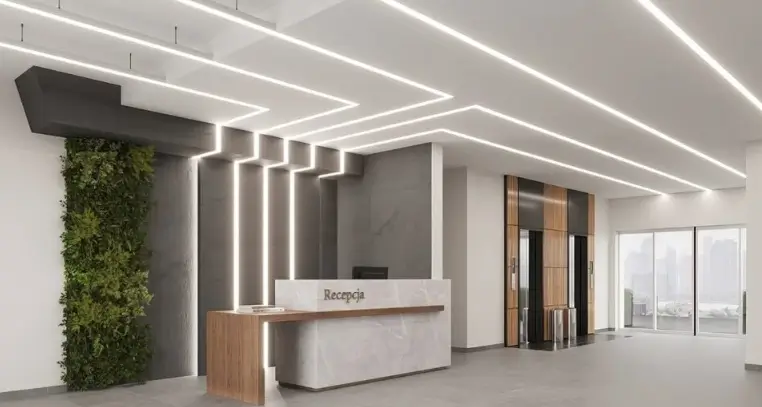
RGBW and COB strips are commonly installed in recessed ceiling coves to create indirect ambient illumination. Continuous light output helps achieve clean architectural aesthetics without visible hotspots.
Retail and Display Systems
Retail environments benefit from adjustable lighting temperatures and dynamic color effects. Warm white channels enhance product visibility, while RGB functionality supports seasonal or promotional lighting themes.
Automotive Interior Lighting
Vehicle interiors increasingly incorporate flexible LED strips for dashboard accents, door panels, and footwell illumination. Compact strip dimensions allow seamless integration into limited spaces.
Hospitality and Entertainment Venues
Hotels, restaurants, and entertainment spaces often require programmable lighting scenes that adapt throughout the day. RGBW strips simplify scene customization while maintaining energy efficiency.
Smart Residential Automation
Modern homes integrate LED strips with voice assistants, mobile applications, and centralized control systems. Flexible voltage controllers improve compatibility with smart automation infrastructure.
In many of these sectors, sourcing consistency and technical reliability remain major considerations when selecting an RGB LED strip lights supplier for large-scale deployment.
Future Trends in LED Strip Engineering
The LED strip lighting industry continues to evolve toward smarter and more efficient systems. Future developments are expected to focus on:
- Higher luminous efficiency with lower power consumption
- Advanced wireless synchronization protocols
- Improved thermal substrate materials
- Human-centric lighting with tunable white technology
- Enhanced waterproofing for outdoor and industrial environments
COB integration is also likely to expand further as manufacturers continue improving light uniformity and reducing production costs.
As lighting systems become increasingly integrated with IoT platforms and intelligent building controls, engineering priorities will extend beyond brightness and aesthetics toward data integration, automation compatibility, and long-term operational efficiency.
Conclusion
Modern LED strip systems represent a combination of electrical engineering, thermal management, optical design, and smart control technology. Features such as RGB + Warm White configurations, standardized 5000x10mm strip dimensions, and DC12V~24V controller compatibility demonstrate how practical engineering considerations shape lighting performance.
Rather than serving only decorative purposes, today’s LED strips function as adaptable lighting infrastructure across commercial, residential, and industrial projects. With advancements in COB technology and intelligent control systems, LED strip lighting continues to evolve into a more efficient, versatile, and technically refined solution for modern environments.